
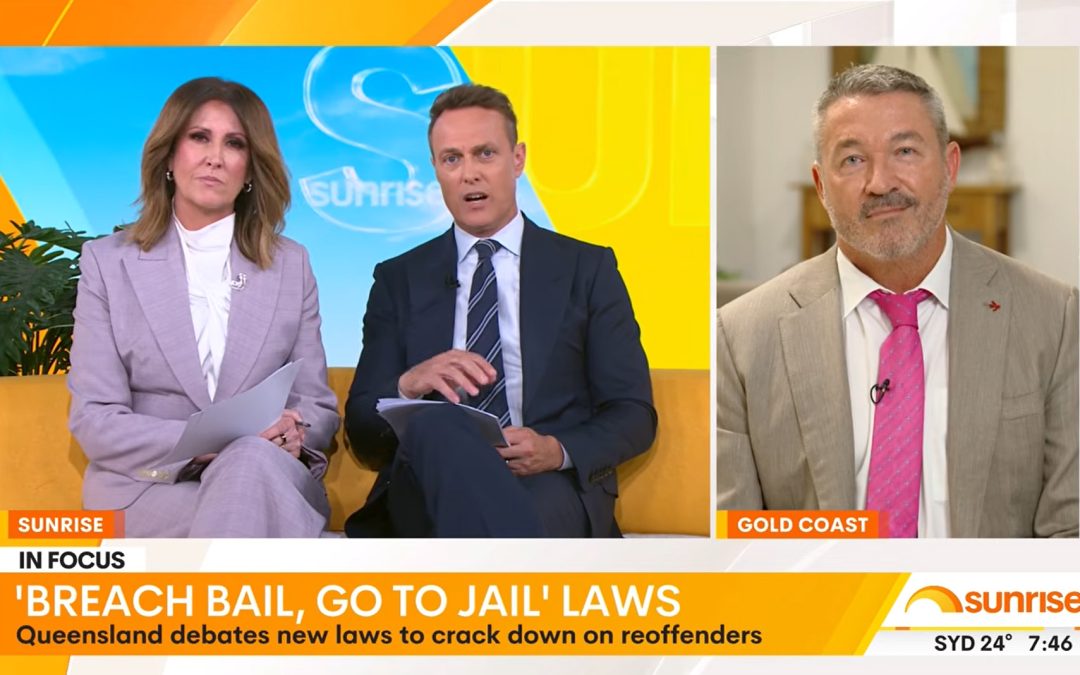
Michael McMillan was invited onto Seven’s Sunrise to discuss Queensland’s Breach Bail, Go to Jail reforms. The Queensland Government has described them as the toughest bail laws in the country. The interview aired in October 2026, while the Bill was being debated in Queensland Parliament.
Watch The Video On YouTube
About the reforms
The Breach Bail, Go to Jail and Other Legislation Amendment Act 2026 passed Queensland Parliament on 29 October 2026 and commences on 30 November 2026. The laws apply to adults and children. They create a new offence for people who commit certain serious offences while on bail. Anyone convicted of the new offence faces a mandatory minimum of 12 months in custody, up to a maximum of three years. That sentence is separate from any sentence for the underlying offence.
The reforms also add a stricter bail test for people charged with a prescribed offence allegedly committed while on bail. The Premier has said the laws are aimed at repeat offenders who reoffend after already going through the courts, not first-time offenders. You can read more in our guide to Queensland’s new Breach Bail, Go to Jail laws.
What Michael discussed
- How the bail test is changing. Under the current system, a person charged with an offence while on bail may need to show cause why they should be released. The magistrate must also be satisfied that any risks can be reduced to an acceptable level. The new laws add a further test: the court must have a high degree of confidence that the person won’t offend while on bail. Michael noted that the legislation doesn’t define this phrase, so it isn’t yet clear how it will be applied.
- Whether every breach of bail means jail. It doesn’t. Michael explained that the mandatory sentence depends on a further offence from the prescribed schedules. Breaching a bail condition on its own isn’t enough. The mandatory term applies once a person pleads guilty or is found guilty, and the court can’t go below it.
- The likely impact. Michael expects more people to be held in custody. He suggested adults may be refused bail more often but questioned whether that would reduce offending. For young people, he expects the impact to be significant, with more children spending long periods in detention. You can read more about how youth sentencing has already changed in our article on Adult Crime, Adult Time and young offenders in Queensland.
- Community safety. Michael acknowledged that Queenslanders want to feel safe and want punishments that fit the offence. His concern is that fixed terms in custody without rehabilitation or therapeutic support may delay the problem rather than resolve it.
If you or a family member is on bail or facing a new charge, Michael can help with bail applications in Queensland.